Hagersville Door SpecialistsBulletin 2 of 3Haldimand County, Ontario
Off-Track Garage Door Reset: how the work is done
The reason to stop pressing the wall button is that an opener cannot tell a racked door from a heavy one.
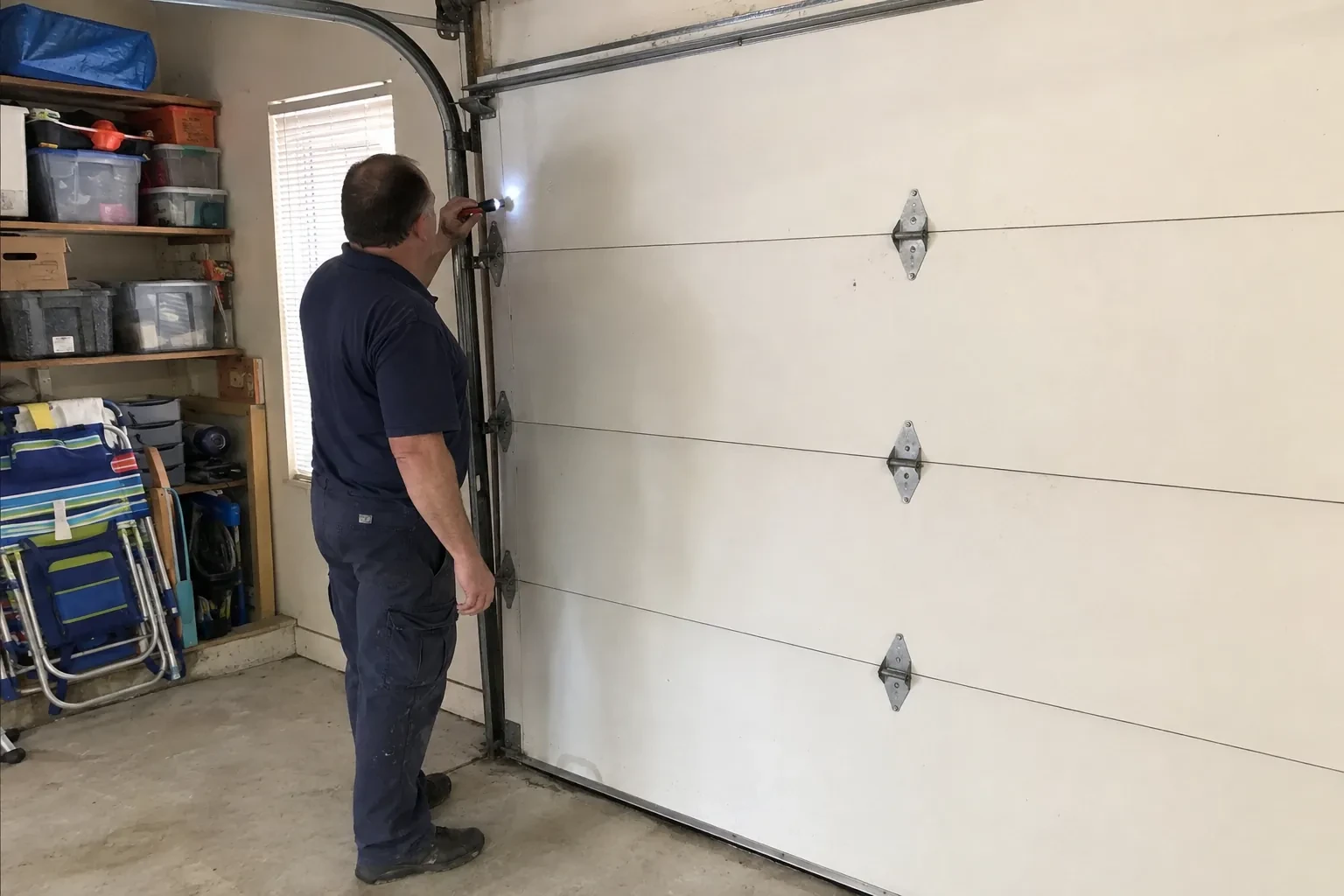
The reason to stop pressing the wall button is that an opener cannot tell a racked door from a heavy one. Each cycle drives the tilted sections harder into the rails, bending hinges, tearing the track from the jamb and stressing the cables that are already out of place. A reset begins by taking the opener out of the picture with the release cord and supporting the door where it sits. From that calm starting point the technician can re-seat rollers and cables in a controlled order, restore alignment and hand you back a door that the opener can move without fighting it.
The opener's role in what happened
An automatic opener is often the last actor in an off-track event even when it is not the cause. The technician looks at the trolley and rail, the arm connecting it to the top section and any operator reinforcement on the door. Force settings that let the motor push against a stuck door, travel limits set past the floor, a manual slide lock left engaged and photo eyes knocked out of line all get noted. The opener is left disconnected for now; this part of the check is about understanding how much strain it put on the door and what will need resetting once the door runs true again.
Putting the cables back on their drums
A cable that unwound or crossed on its drum is stripped back and rewound in its groove, beginning at the cable stop and laying each turn beside the last. Both cables are set to equal length so the bottom section hangs level, then the drums are locked to the shaft and the springs are rewound to the door's weight. A cable with kinks, rust or broken strands is replaced along with its partner so the two sides age together. This part of the work is done with the door clamped fully closed and the sections held, because a cable coming under tension is exactly when a door wants to move.
The warning signs worth acting on
Doors rarely leave their tracks without notice. A door that starts closing with one corner touching down first, a cable that looks looser than its partner, a new squeal or grinding at the curve, a section that shudders as it passes the top of the track, or an opener that suddenly needs more force are all early signs. Each of them is a small adjustment when caught, and a reset when ignored. After the visit you know what the door sounded and looked like when it was right, which makes the change easy to spot. Calling at the first sign keeps the job to rollers or a bracket.